
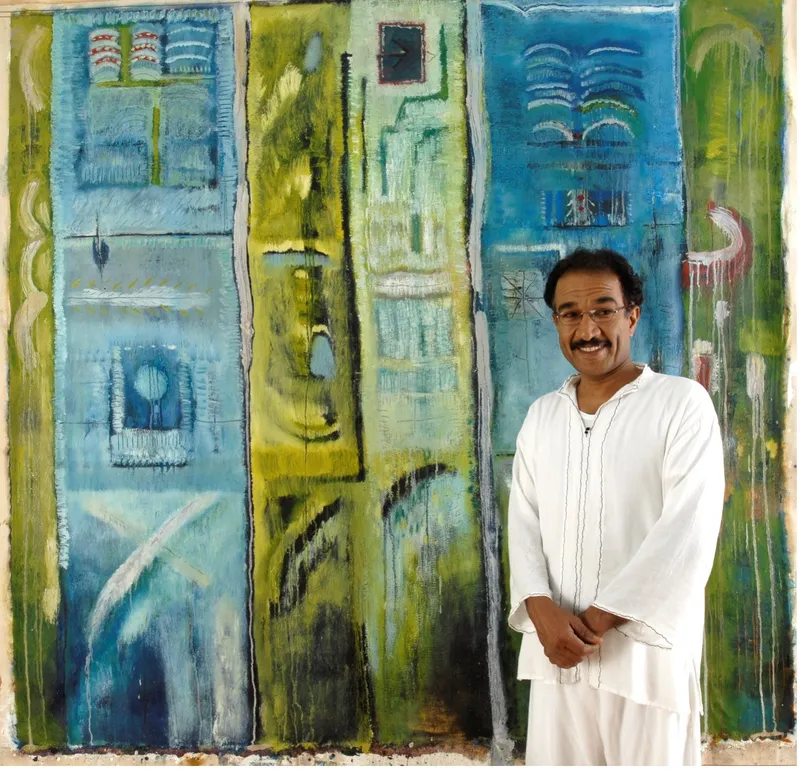
Abdulrahman Alsoliman (b. 1954, Al-Ahsa, Saudi Arabia)
Artist, Author, and Architect of Contemporary Saudi Visual Culture
Born in 1954 in the culturally rich region of AlAhsa, Abdulrahman Alsoliman stands as one of the most influential figures in the evolution of Saudi Arabia’s contemporary art scene. Based in Dammam, Alsoliman began his artistic journey in 1971, developing a visual language grounded in the architectural forms, calligraphic rhythms, and natural landscapes of the Arabian Peninsula.
Alsoliman began exhibiting his work in the early 1970s, often in unconventional spaces such as football clubs, one of the few venues then available for artistic expression. Over the past five decades, his paintings, often layered with abstract symbolism and references to traditional aesthetics, have been exhibited across the Arab world, Europe, and Asia, including in France, Germany, China, and Morocco. His work resonates both locally and globally, offering compositions that reflect the soul of his surroundings while engaging in broader visual dialogues. In 2018, the renowned international auction house Sotheby’s auctioned his work Worshippers Leaving the Mosque, which achieved a sale price of £137,500 and now belongs to its present owner.
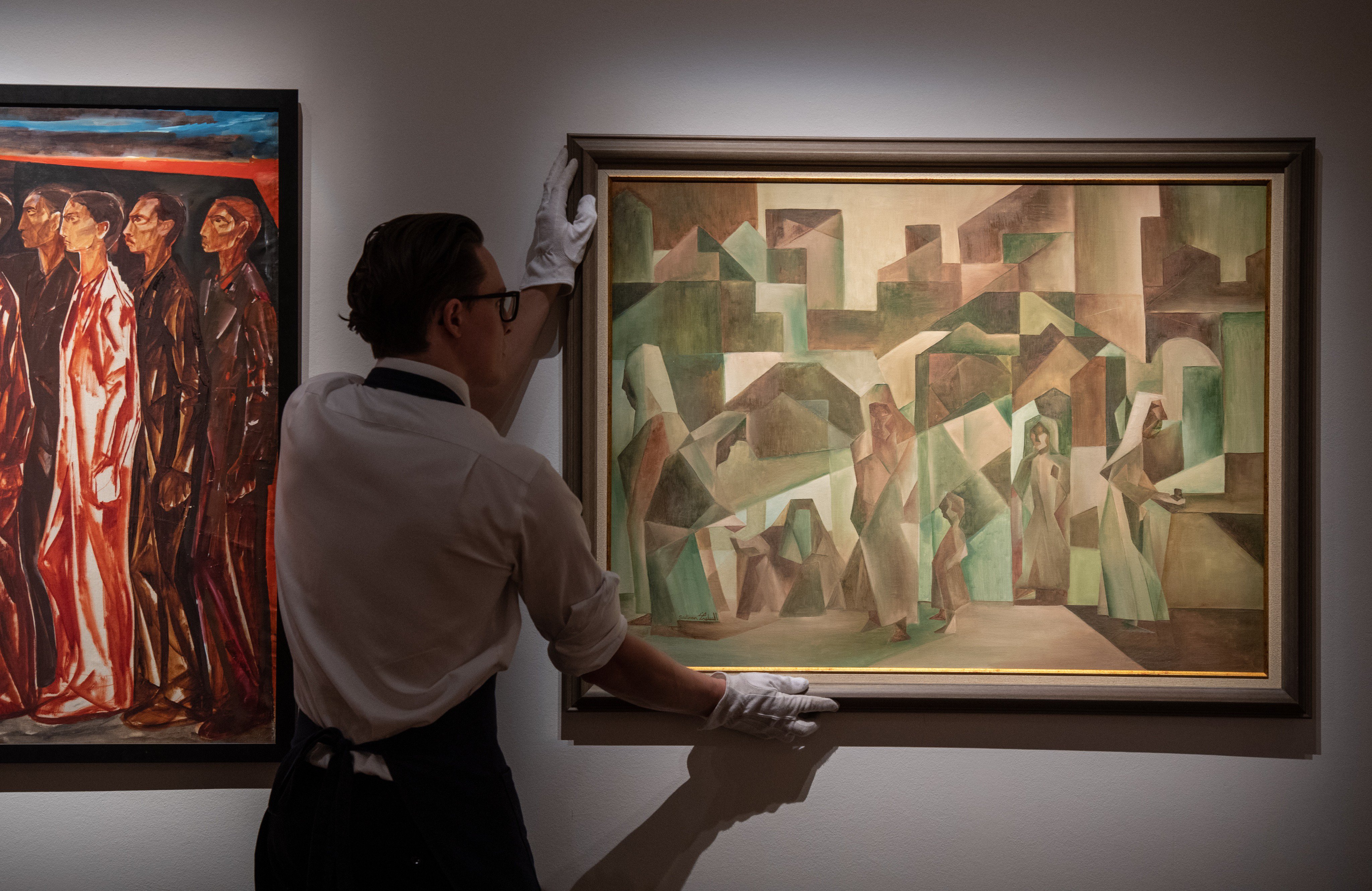
Image of Worshippers Leaving the Mosque featured on this website are reproduced with credit to Sotheby’s. Original post published by Sotheby’s on X: https://x.com/Sothebys/status/1054745028449521666. All rights reserved by Sotheby’s.
But Alsoliman's influence extends far beyond the studio and action houses. A critical thinker and cultural historian, he has been instrumental in shaping the intellectual and institutional frameworks that support Saudi art today. His leadership at the Society of Culture and Arts in Dammam, from 1979 to 2000, as Head of the Fine Arts Department, Head of Media, and Director of Activities, laid foundational pathways for arts programming in the Eastern Province. In 2007, he was elected as the first president of the Saudi Society for Fine Arts, helping formalize a national platform for artistic practice and advocacy.
Alsoliman's contributions to cultural discourse began early. In 1983, he joined Al-Yawm newspaper as editor of its Fine Arts section, a role he continues to hold. His editorial platform has long championed emerging voices and documented the growth of the Kingdom’s creative landscape. A prolific essayist, his writings have appeared in major regional newspapers and literary journals, including Al-Sharq Al-Awsat, Al-Hayat, Albayan, Zaman, and Independent Arabia, as well as in seminal cultural magazines like Al-Faisal and Life of Fine Arts (Syria).
In 2000, he published The Journey of the Saudi Fine Arts Movement, widely regarded as the first comprehensive chronicle of the country’s modern art history. The book has since become a key reference for scholars and practitioners alike. He expanded on this legacy through his memoir, The Color of Space and the Scent of Memory (2018), and later through Signs and Symbols (2021), published by Misk Art Institute under the patronage of the Saudi Ministry of Culture.
A mentor to a generation of Saudi artists, Alsoliman is often credited not only for his own practice but for his thoughtful critiques and guidance that have shaped the careers of many younger voices. His advocacy is matched by a philosophical approach to both painting and writing - each, for him, a vessel for exploring the emotional and cultural dimensions of image-making.
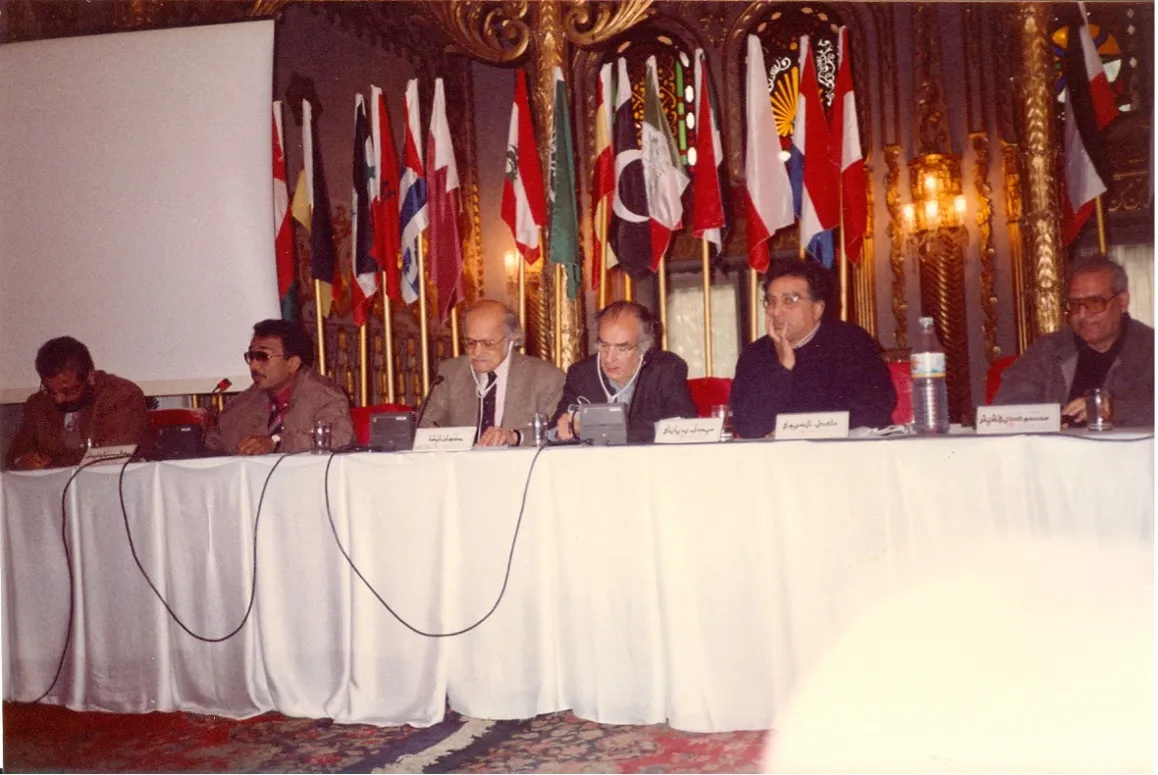
He has played advisory roles for numerous institutions and served on juries for regional and international art biennials. A founding member of the Gulf Fine Arts Friends Association (1985) and the Visual Arts Society of Saudi Arabia (2021), Alsoliman remains at the heart of the Kingdom’s artistic infrastructure.
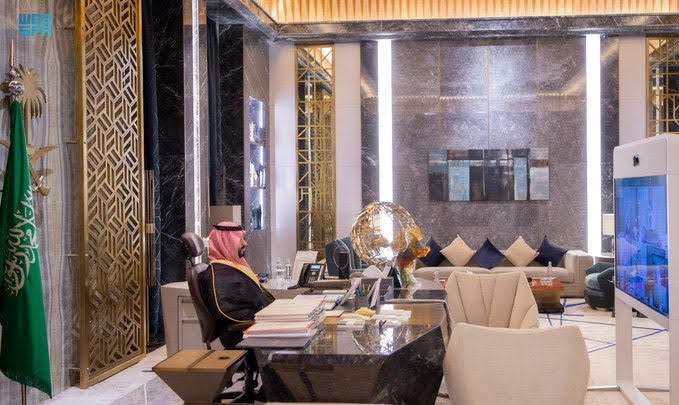
His work is held in several significant collections, including the Barjeel Art Foundation in the UAE and the King Abdulaziz Center for World Culture (Ithra). In 2021, one of his works was installed in the office of His Royal Highness Crown Prince Mohammed bin Salman.
With a career that bridges creation, criticism, and cultural leadership, Abdulrahman Alsoliman continues to be a defining voice in the story of Saudi contemporary art.